
Content verified by

What is polyendocrine metabolic ovarian syndrome?
Polyendocrine metabolic ovarian syndrome (PMOS) (formerly known as polycystic ovary syndrome) is a relatively common medical condition that affects women’s ovaries. In PMOS, tiny sacs grow on your ovaries. The sacs contain immature eggs that the body never releases for ovulation. When you have many sacs on your ovaries, it can lead to irregularities with your menstrual cycle, and can lead to problems with fertility.
The condition affects how your ovaries work and impacts your hormone levels. Women can often be unaware they have PMOS until they have fertility investigations due to struggling to conceive.
At Guy’s and St Thomas’ Specialist Care, our women’s health specialists offer dedicated gynaecological support, care and treatment for women with PMOS to help them manage their symptoms.
Experts in women's health
Our world-leading gynaecologists offer:
- short-notice appointments in as little as 1 week
- fast access to private investigations
- private personalised treatment plans

Who is at risk of polyendocrine metabolic ovarian syndrome?
Experts do not understand why some women are more likely to develop PMOS than others, but it is believed that those with a family history of type 2 diabetes may be at a higher risk.
This is because insulin resistance – a characteristic of type 2 diabetes – can trigger or exacerbate hormonal imbalances that are typically associated with PMOS.
PMOS affects women of child-bearing age, but most commonly women between the ages of 18 and 35. Once a woman reaches the age where the menopause begins, she will no longer have PMOS but may still experience some symptoms such as hair loss and difficulty losing weight.
Symptoms of polyendocrine metabolic ovarian syndrome
There are 3 main signs of PMOS that your doctor will look for:
- high androgen levels – high androgen levels could mean a hormonal imbalance and cause physical symptoms like excessive hair growth and acne
- irregular periods – absent or irregular periods can suggest that your ovaries are not working properly
- polycystic ovaries – an ultrasound scan can see these enlarged ovaries containing many fluid-filled sacs
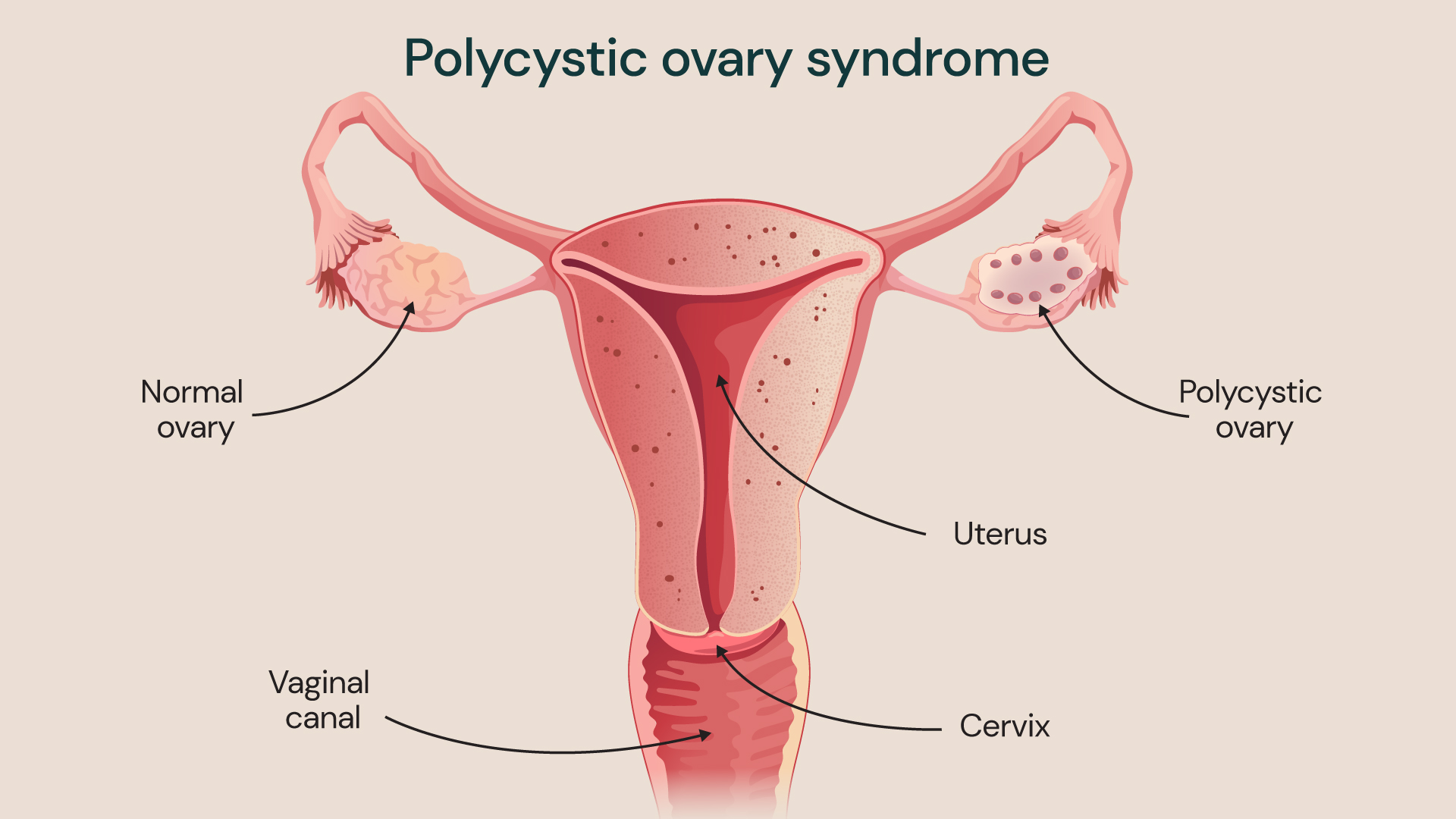
Scientific illustration showing a polycystic ovary compared to a normal ovary.
Having polycystic ovaries does not necessarily mean you have PMOS, and you can have polycystic ovaries without experience any symptoms of PMOS.
To be diagnosed with PMOS, you must fit at least 2 of the above criteria. For example, you could have PMOS if you have irregular periods and high androgen levels.
PMOS symptoms can vary from person to person but, in general, they can include:
- difficulty conceiving
- excessive hair growth on your face, chest, back and lower body
- irregular or no periods
- oily skin or acne
- thinning hair or hair loss
- weight gain
If you’re experiencing symptoms of PMOS, contact our team to learn more about treatment options with our specialist gynaecologists.
What causes polyendocrine metabolic ovarian syndrome?
No one knows the exact cause of polyendocrine metabolic ovarian syndrome, but it can run in families.
PMOS is related to abnormal hormone levels, including insulin (the hormone that turns food into energy and manages blood glucose levels). Many women with PMOS are insulin resistant, which means their body overcompensates and produces too much. High insulin levels may increase the production of other hormones like testosterone and androgen.
Being overweight or obese can also elevate your insulin levels, potentially leading to PMOS.
Complications of polyendocrine metabolic ovarian syndrome
Polyendocrine metabolic ovarian syndrome can lead to complications when left unmanaged.
These can include:
- endometrial hyperplasia and endometrial cancer
- fertility problems – women with PMOS may find it difficult to conceive due to irregular ovulation
- high cholesterol
- obstructive sleep apnoea
- type 2 diabetes
Your doctor may class your pregnancy as high-risk if you conceive with polyendocrine metabolic ovarian syndrome – especially if you develop gestational diabetes or pre-eclampsia. We offer dedicated high-risk maternity care, giving you confidence that we will manage your condition well and prioritise you and your baby’s safety.
We also offer dedicated fertility services so you receive the treatment and care you need when managing PMOS and fertility.
However, with our specialist team’s personalised management and care, you can minimise your risk of complications. Contact us to book an appointment with one of our gynaecologists.
Polyendocrine metabolic ovarian syndrome diagnosis
If you experience PMOS symptoms, our gynaecology specialists are on hand to help. During your initial consultation, they’ll ask about your symptoms and rule out other potential causes, before referring you for further investigations to confirm the diagnosis.
Next, you’ll have a blood test to check your hormones and see whether PMOS or another hormone-related condition has caused your symptoms.
Our team will also arrange an ultrasound scan so we can visually check your ovaries and womb. The ultrasound scan may be internal or external – your consultant will insert an ultrasound probe into your vagina to gain a clear view of your ovaries.
The ultrasound scans will highlight whether you have polycystic ovaries and any other abnormalities that may be causing symptoms, like polyps or fibroids.
Polyendocrine metabolic ovarian syndrome treatment
Although there is no cure for PMOS, there are many options to help manage your symptoms and improve the symptoms you experience on a daily basis. Treatment can vary depending on your symptoms and how many you’re experiencing.
Lifestyle changes
Your symptoms and risk of complications may be higher if you are overweight. To minimise this, your doctor may suggest you lose weight – even a 5% loss of body weight may make a difference.
Eating a well-balanced diet and regularly exercising are the healthiest ways to lose weight and help you maintain it long-term. Our gynaecologists work closely with our team of dietitians to offer nutrition advice to help you achieve your goals.
Medication
Some contraception might be suitable for managing your symptoms. These can include:
- contraceptive pills – may help with irregular or absent periods and minimises your risk of endometrial cancer, which can be associated with irregular and absent periods
- intrauterine systems (IUS) – also known as the hormonal coil, the doctor places this small system into your uterus where it releases the hormone progesterone to help regulate your menstrual cycle
Sometimes, you might need to try different medications or contraception types to see which one works best for your body. We’ll guide you through the process so you can find what suits you.
Some women may be recommended inositol, which is a supplement that can help with insulin resistance, hormonal imbalance and ovulatory function. Inositol improves how your body responds to insulin, reduces androgen levels (therefore improving symptoms like acne, excess hair growth, and hair loss on the scalp), and improves egg quality.
Fertility treatment
Some women only discover they have PMOS when having fertility investigations after struggling to conceive. Although you may find it a challenge, we’re here to help.
We might prescribe clomifene if you have PMOS and are trying to get pregnant. This medication encourages an egg’s release (ovulation).
If clomifene doesn’t work, we might recommend another medication called metformin instead. Metformin also encourages regular periods and reduces your risk of miscarriage.
Unwanted hair or hair loss
Some prescribed medications may help to slow excessive hair growth or loss. Topical creams may be recommended when trying to slow hair growth.
Laser hair removal may be an option to remove excessive hair growth in unwanted areas.
Our specialists are committed to helping you manage your PMOS symptoms through personalised care that meets your needs. Contact our team to learn more about getting the care you require.
Reviewed regularly to reflect clinical best practice
Last reviewed: 19 January 2026
Locations
Our private gynaecology service is available at the following locations:
Discover our PMOS experts
Ask our leading gynaecology team if you’re concerned about PMOS symptoms or want help managing your condition.